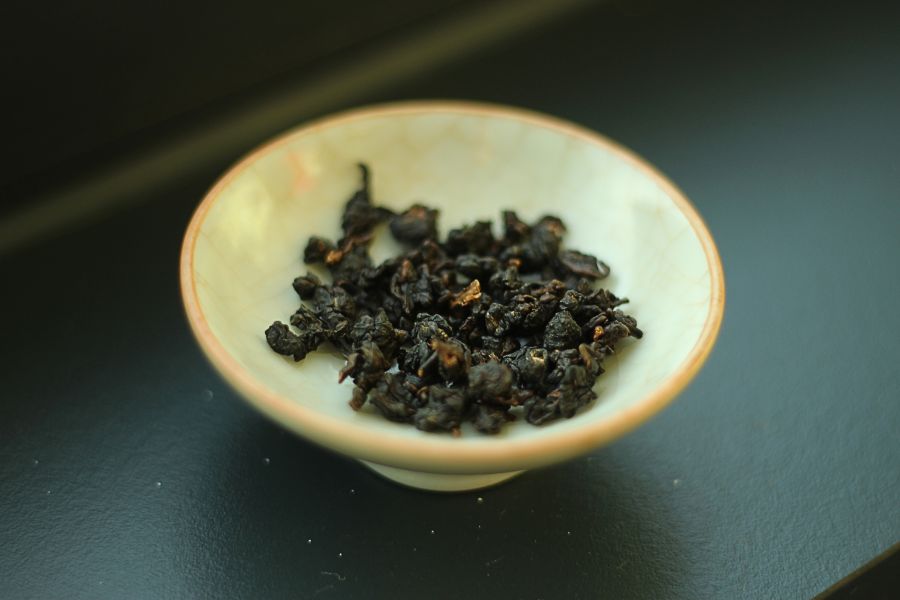
The cold from last week has disappeared and it almost feels like spring now. The weather is good, the sun is shining and we might almost forget that we haven’t even passed the halfway point of winter… With spring in mind, I picked a tea for today’s session: a 2021 Formosa Tie Guan Yin.
2021 Formosa Tie Guan Yin
Teamania sent me many samples last year (or two years ago?), and I haven’t had much time to explore all of them. One that caught my attention right from the beginning is the 2021 Formosa Tie Guan Yin.
This one comes from Pinglin in Taiwan and was harvested during the spring. It was processed according to (semi-)traditional methods, resulting in a stronger degree of oxidation than most modern tie guan yin oolongs.
This one has around 50% oxidation, so I’m really excited to try this one, as I prefer more traditional oolongs.

Tasting
- Aroma of dry leaves: burnt breadcrusts, brown sugar, sour/sweet jam.
- Aroma of wet leaves: the jam is dominant and offers sweetness with a sour edge.
- Leaves: some stems, tightly rolled balls with some twigs in the mix.
- 5g for a 100ml porcelain gaiwan.
1 (20 sec): subtle infusion, but it’s already offering a lot. The sweetness is there, but it is topped off with a mineral edge. The sweetness returns in the aftertaste and the liquor feels thick.
2 (25 sec): no increase in flavors at the surface, but it feels fuller beneath the surface. The liquor has thickened even more and offers notes of caramelized bread crusts. The aftertaste lasts longer than the aftertaste in the previous infusion.
3 (30 sec): the leaves have fully opened and offer sweetness with strong notes of caramelized bread crusts and brown sugar. The taste reminds me of a bakery after they have just finished baking a batch of bread. Some crusts have burnt in the oven, and it is exactly that which I am getting. The minerality I experienced in the first infusion is also there in the background.
4 (40 sec): full on sweetness with an edge of sour jam. From the middle onwards, floral notes also appear. The aftertaste is definitely sweet! Interesting to observe the interplay of these two.
5 (60 sec): this one is a bit longer, and I feel the florality has become more dominant. Less sweet and more about the floral notes. Even though it is January, drinking this tea feels like late spring.
6 (long): very similar to the previous infusion. Really good and no harsh notes pop up. Overbrewing it seems difficult, as it still offers floral notes with a sweet edge.
Conclusion
Great tea to start the day, and fascinating to see how the sweetness evolved into more floral notes. Good aftertaste that stayed with me for a while after the tea session.
If you want to try this tea, you can buy it here.